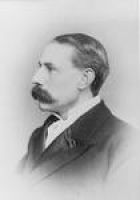
Sir Edward Elgar (1857-1934) was the son of a piano-tuner and music shop owner. He was self-taught in composition and began his career by writing pieces for local perfomances. He became the leading English composer of his generation and a significant figure among late Romantic European musicians.
In 1889 he married one of his piano pupils, Caroline Roberts, and moved to London. Success came later, after his return to the West Country, with the completion of the "Enigma Variations", first performed in London in 1899.
Elgar was capable of expressing dominant and patriotic themes in his music. His Pomp and Circumstance March No. 1, adapted for the coronation of King Edward VII, is extremely popular even today.
"The Dream of Gerontius", based on a poem by John Cardinal Newman, is a remarkable study of a man on his deathbed. "The Enigma Variations", with a portrait in each variation of one of the composer's friends, and its unsolved musical puzzle, is one of the best of his works.
The concert overture "Cockaigne" is an evocation of London, while the "Elegy", the "Introduction and Allegro 2" and the "Serenade", all for string orchestra, offer music of the highest quality.
Elgar's Cello Concerto, written in 1919, enjoys great popularity. His earlier, difficult Violin Concerto, composed before the war, also achieved success. He completed two symphonies and several oratorios.
Elgar wrote a number of pieces for violin and piano during the earlier part of his life. Of the smaller pieces that survive, "Chanson de nuit" and "Chanson de matin" have considerable charm. Of greater weight are the three chamber works of 1918: the Violin Sonata in E minor, String Quartet in the same key and Piano Quintet in A minor.
Elgar wrote relatively little for the piano, but his "Salut d'Amour", originally written with a German title for his wife, has proved popular both in its original form and in a multitude of arrangements.
"The Dream of Gerontius", based on a poem by John Cardinal Newman, is a remarkable study of a man on his deathbed.
"The Enigma Variations", with a portrait in each variation of one of the composer's friends, and its unsolved musical puzzle, is one of the best of his works.
After the death of his wife in 1920 he seemed to lose his previous inspiration and wrote relatively little. He died before completing the work on his third symphony.