Wikipedia:
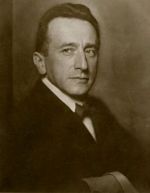
Leo Blech (* April 21, 1871 in Aachen; † August 25, 1958 in Berlin) was a German composer and conductor.
Leo Blech grew up in a Jewish family. His parents were Jacob Blech, born Jacob Bleeck (1834-1921), a brush and paintbrush manufacturer, and Rosetta Hartog, born Roosa Hertog (1836-1914). Although he gave a concert in his hometown as a pianistic prodigy at the age of seven, Blech initially pursued a commercial apprenticeship with a cloth merchant in Aachen from 1887 to 1891, following the example of his two older brothers.
After the Cologne conservatory director Franz Wüllner confirmed Blech's talent for composition, he began studying at the Hochschule für Musik in Berlin in 1891. He perfected his piano playing there with Ernst Rudorff, but his composition teacher Woldemar Bargiel rejected him as talentless, so Blech dropped out of his studies. In 1892 he composed his first opera, Aglaja, which was successfully premiered at the Stadttheater Aachen in October 1893; at the same time Blech received a position there as second, and later first, Kapellmeister. Blech finally acquired a thorough theoretical education through private studies with Engelbert Humperdinck during the theater vacations of the years 1895 to 1897 in Frankfurt am Main.
In September 1899 Blech went to Prague, where he worked as first Kapellmeister at the Deutsches Landes-Theater until 1906. In September 1906 he accepted a call to the Berlin Court Opera; in June 1913 he was appointed General Music Director for life. Due to differences with the State Opera Director Max von Schillings, Blech temporarily left the State Opera and became General Music Director at the Deutsches Opernhaus Charlottenburg in August 1923. Already in April 1924 he resigned from this post after disputes with the supervisory board. From October to December 1924 he worked as conductor at the Große Volks-oper Berlin and in the fall of 1925 was director of the Vienna Volksoper together with Hugo Gruder-Guntram. In March 1926 he returned to Berlin and to his post as General Music Director at the Staatsoper Unter den Linden.
With Hermann Göring's special permission, the Berlin General Director Heinz Tietjen was able to continue to employ Leo Blech during the Nazi regime despite his Jewish origins. Thus, he conducted a total of 2,846 performances at the State Opera until April 1937. In 1937, his replacement was pursued with increasing vigor and he was compulsorily retired - formally "for reasons of age." Blech then emigrated first to Latvia, where he conducted numerous opera performances in Riga from 1938 to 1941 with great success as principal guest conductor at the National Opera. He also made guest appearances with the Estonia Orchestra in Tallinn. He taught at the Latvian Conservatory, where he influenced a whole generation of young Latvian conductors, including Arvīds Jansons and Leonīds Vīgners. After the occupation of Latvia by the Soviet Union in the summer of 1940, Blech was invited to give guest performances in Moscow and Leningrad. Conditioned by his great success, he was asked to take over as director of the Moscow Conservatory. He declined, however, and returned to Riga, which was conquered by German troops in June 1941. The deportation of the Blech couple to the Riga ghetto was imminent. Through Tietjen's mediation, with Göring's approval and the support of the Swedish legation, he and his wife were able to emigrate secretly to Sweden via Berlin and Saßnitz in September 1941.
At the Royal Opera in Stockholm, where he had already conducted regularly since 1925 and had been appointed court conductor in June 1935, Blech enjoyed a successful retirement career that culminated in his interpretation of the operas of Giuseppe Verdi and Richard Wagner. In Stockholm, he was a founding committee member of the Free German Cultural Association.
In early 1946 Blech made contact with the new director of the Berlin State Opera Ernst Legal, but for various reasons there was no renewed collaboration. In September 1949, at Tietjen's invitation, Blech returned to Berlin for good, and on October 18, 1949, began his own new production of Carmen as general music director at the Städtische Oper in Charlottenburg. In 1951, he conducted his two opera one-acts Das war ich and Versiegelt in a celebratory performance for his 80th birthday. In addition, Blech again conducted the Berlin Philharmonic, for example in several serenades in the courtyard of the Grunewald hunting lodge.
In the summer of 1953, a worsening hearing condition and a fall from the conductor's podium forced him to end his career. He died in 1958 in Berlin and was buried in the Heerstraße cemetery (section 20 Wald 1e).