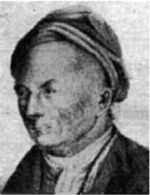
Gottfried August Homilius (1714-1785) spent his youth in Porschendorf, near Lohmen, where his father was a pastor. In 1735 he attended the University of Leipzig, where he was trained by Johann Sebastian Bach, among others. In May 1742 he became organist at the Frauenkirche in Dresden and in 1755 obtained the position of cantor at the Dresden Kreuzschule and became musical director of the three main churches: Kreuzkirche, Frauenkirche and Sophienkirche. His first motets stem from this period.
After the destruction of the Kreuzkirche by the Prussians in 1760 the Frauenkirche became the center of his activities. A few years before his death he composed a year's worth of church cantatas. In 1784 he dedicated twelve magnificats and a Latin motet to the Dresden City Council and set up the organ for the new Kreuzkirche.
While other artists in this historical period of transition gradually proceeded on the road to independence, Homilius' life and work were completely dedicated to his religious mission. He devoted attention to church hymns as part of his goal to edify the faithful. The performances of his Passions in the 1760s in Berlin made him famous outside the Dresden region.