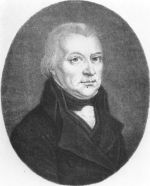
Franz Bühler (1760-1824) was born in Schneidheim, Germany, and received his first musical instruction from his father, a teacher and organist. In 1770 he went to the Benedictine abbey in Neresheim as a choir and Latin pupil: "A lively mind and a fiery thirst for knowledge encouraged the progress which I made in my studies and in my organ and piano playing." In November 1777 he changed to the Jesuit college of St. Salvator in Augsburg, where he found "new nourishment" in this institute of higher learning.
One year later he entered the Benedictine abbey of the Holy Cross in Donauwörth as a novitiate. There he took his solemn vows in 1779, and in 1784 he received the priestly sacrament. His main aim, as he writes in his autobiography, was always "perfection in music and composition." In 1794 he was called to Bozen as organist in the parish church there.
In 1801 he was appointed maestro di cappella at the cathedral in Augsburg, where he lived until his death. "The art of music has always been the more beautiful star of this earthly life, to which I turn my gaze in joy and sorrow. Every artist in Bavaria must rejoice in the Bavarian spirit with which the enlightened government here supports everything good and beautiful."
His oeuvre includes countless masses, requiems, hymns, church songs, oratorios, vespers, litanies, vespers, chamber music, and organ music. Many of his works were printed in Augsburg by Johann Jakob Lotter.