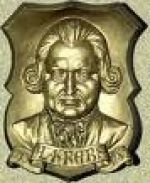
Johann Ludwig Krebs (1713-1780) was born in 1713 in Weimar, Germany, the son of Johann Tobias Krebs, a well known organist. J. Tobias had at least three sons who were considered musically talented, and J. Ludwig was sent to Leipzig to study organ, lute, and the violin.
Krebs was privileged enough to be taught by Johann Sebastian Bach on the organ. Bach (who had also instructed J. Ludwig’s father) held Krebs in high standing. From a technical standpoint, Krebs was unrivaled next to Bach in his organ proficiency. However, it was quite difficult for Krebs to obtain a patron or a post at any cathedral. This can be attributed to the fact that by this time the Baroque tradition was being left behind in favor of the new Galant Music Style. This point in time also marked the transition to the Classical Music Era, with composers such as Bach's son, C.P.E. Bach.
Krebs took a small post in Zwickau, and later in 1755 (five years after the death of Bach and the official end of the Baroque period) he was appointed court organist of Gotha–Altenburg under Prince Friedrich. Krebs was so desperate at the time that he did not work for money but instead for food to feed his family (he had seven children). Despite never holding a significant post, never being a court composer, and never being commissioned for a work, Krebs was able to compose quite a significant collection of works, though few were published until the 1900s.
Krebs received excellent training from Bach, and his counterpoint is considered by many to be comparable to Bach's. Krebs’s Fantasia in F minor for oboe and organ is one of his most expressive and his most famous works, as are the Eight Short Preludes and Fugues that are sometimes attributed to him as well as to his father and J.S. Bach. Krebs's three sons went on to become well known performers in their day, and one of them became a noted Lieder composer.