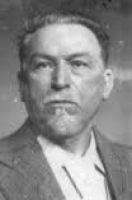
Friedrich August Bungert (* March 14, 1845 in Mülheim an der Ruhr, Germany; † October 26, 1915 in Leutesdorf, Germany) was a German composer and poet.
August Bungert was born on March 14, 1845 in Mühlheim an der Ruhr, Germany, and grew up with his younger sister Henriette and Matthilde. Early in his secondary schooling, it was obvious that he possessed exceptional music talent which subsequently was supported by his teacher, Heinrich Kufferath. Heinrich Kufferath was a brother of the composer, Hubert Ferdinand Kufferath. Bungert's father who was a prosperous merchant and respected member of the middle-class society did not hold his ambitions in very high esteem and considered the musical ability of his son as an ''unfortunate inclination''. He desired for his son a career as a merchant or doctor. Only his mother supported him but she died when Bungert was nine years old. In the following period, confrontations with his father increased. After completing secondary school, August Bungert relocated or better said ''fled'' to Cologne, Germany, at the age of 16. He attended the conservatory there and was a student of Hubert Ferdinand Kufferath. The sister of the composer Max Bruch discovered him. She was assigned the task by the ''Conservatoire de Paris'' to select a talented musician for further education in Paris.
Bungert's financial situation in Paris was not good. He kept his head above water by providing piano lessons until he was in dire straights and his father provided him reluctantly limited support. At the Paris Conservatory the talented musician came to the attention of the famous musicians Berlioz, Auber and Rossini. In his opinion, Bungert did not receive the support which he had hoped would come to fruition. For that reason as well as an unhappy romatic affair, he returned to Germany. Beginning in 1869, he took a position as choir director. In 1870, he was the director of the ''Kurorchester'' in Bad Kreuznach, Germany. Although several compositions were created in Kreuznach, the original performance of his work ''Hutten and Sickingen'' on the occasion of the dedication of a monument at the foot of the ''Burg Ebenburg'' (Ebenburg Fortress) was deemed a success. However, in the long run he was not satisfied to remain in the position. Bungert left for Berlin in 1874 where he continued his studies under the direction of Friedrich Kiel. Here evolved several important works including the piano quartet in E-flat major, op. 18, for which he received a prize in 1878. Johannes Brahms was one of the jury members. Based on Bungert's own statements, he composed the work when he was bed-ridden with a fever and an appendicitis. The quartet was even performed 1913 in Constantinople with great success. With the prize money which he received, Bungert travelled for the first time to Italy with his sister Matthilde in 1879.
Allegedly as a result health reasons but probably due more to a deeply felt yearning for Italy, Bungert relocated his residence to Pegli near Genoa. Here came together with Giuseppe Verdi. His neighbor was the philosopher Friedrich Nietzsche with who he later maintained a casual friendship. The opera ''Aurora'' was composed in Pegli which was orginally performed in Leipzig, Germany, in 1884.