


Wikipedia:
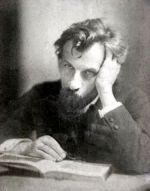
Hans Erich Pfitzner (* May 5, 1869 in Moscow; † May 22, 1949 in Salzburg) was a German composer, conductor, and author of theoretical and political writings, often with decidedly anti-Semitic aims.
Hans Pfitzner was born to Robert Pfitzner (1825-1904), an orchestral violinist and music director[1] trained at the Leipzig Conservatory, and his wife Wilhelmine Pfitzner, née Reimer (1841-1924). His parents moved with him to Frankfurt am Main in 1872. Pfitzner received his first music lessons from his father. In 1880, at the age of eleven, he composed his first works, and in 1884 he composed his first surviving songs.
From 1886 to 1890 Pfitzner studied composition with Iwan Knorr and piano with James Kwast at the Frankfurt Hoch'schen Konservatori-um. At this time he became a member of the Sängerschaft St. Pauli, which was part of the Deutsche Sänger-schaft.[4] He taught theory and piano at the Koblenz Conservatory from 1892 to 1893. In 1894 he accepted a position as unpaid Ka-pellmeister at the Stadttheater in Mainz. In 1895 Pfitzner's first major works were premiered there, the opera Der arme Heinrich and the incidental music for Das Fest auf Solhaug by Henrik Ibsen.
In 1897 Pfitzner moved to Berlin and became a teacher of composition and conducting at Stern's Conservatory. In 1899 Hans Pfitzner and Mimi Kwast, a daughter of his former piano teacher, were married. The marriage produced sons Paul (1903-1936) and Peter (1906-1944) and daughter Agnes (1908-1939). The fourth child Johannes, born in 1911, died immediately after birth.
The premiere of Pfitzner's second opera Die Rose vom Liebesgarten took place in 1901 at the Stadttheater am Brausenwerth (now part of Wuppertal). At the Vienna Court Opera, the opera was reprised in 1905 under the direction of Gustav Mah-ler.
In 1903 Pfitzner also became first Kapellmeister at the Theater des Westens in Berlin. From 1907 to 1908 he was conductor of the Kaim Orchestra in Munich. In 1908 the family moved to Strasbourg. There Pfitzner directed the Municipal Conservatory and the symphony concerts of the Strasbourg Philharmonic Orchestra. In 1910 he also took over the musical direction of the Strasbourg Opera, where he also worked as a stage director. In 1913 he was appointed professor.
During World War I, Pfitzner volunteered for military service in 1915, but was deferred.
In 1917, the "Musika-lische Legende" Palestrina, considered Pfitzner's most important work, was premiered at Munich's Prinzregententheater under Bruno Walter. At the center of this multi-layered drama about Giovanni Pierluigi da Pa-lestrina is the tension, transferred to the Renaissance period, between the autonomy of the work of art and artist on the one hand and the demands of society on the other.
After the return of Alsace-Lorraine to France, Pfitzner moved to Unterschondorf am Ammersee in 1919. In 1919/1920 he was temporarily conductor of the Munich Philharmonic Orchestra. In 1920 he became head of a master class for composition at the Prussian Academy of Arts. In 1921 he composed his romantic cantata Von deutscher Seele after poems by Joseph von Eichendorff, and in 1922 the Piano Concerto in E-flat Major.
After he had to undergo a gall bladder operation in 1923, Adolf Hitler visited him in the hospital. In the same year he composed the Violin Concerto in B minor, op. 34, which he dedicated to the violinist Alma Moodie, and in 1925 the String Quartet in C-sharp minor. In 1926 his wife Mimi died.
The celebrations and honors for his 60th birthday in 1929 brought Pfitzner great public recognition once again. In the same year he received a teaching position at the Staatliche Akademie der Tonkunst in Munich and moved his residence to Munich.[2] In 1930 he composed the choral fantasy Das dunkle Reich, funeral music based on poems by Michelangelo, Goethe, Conrad Ferdinand Meyer and Richard Dehmel. In 1930/1931 he wrote his last opera Das Herz. In 1932 he reworked the String Quartet in C-sharp Minor (1925) into a symphony. In 1934 he retired from the Staatliche Aka-demie der Tonkunst (State Academy of Music), which led to disputes with the Prussian Prime Minister Hermann Göring due to his excessive demands for retirement pay. In 1936 his son Paul died. In the following year, Pfitzner fell out with his children Peter and Agnes.
In 1939, the celebrations and honors for Pfitzner's 70th birthday were far less spectacular than ten years earlier.
His depressed daughter Agnes, suffering from the end of her relationship with an SS-officer and feeling she was failing as an assistant doctor, took her own life with cyanide two weeks after the celebrations. Pfitzner reacted without understanding. The loss of his daughter and the estrangement from his son Peter may have played a significant role in shaping Pfitzner's increasingly ill-tempered character[12]. In December 1939, Pfitzner entered into a second marriage with Mali Stoll née Soherr (1893-1963). In 1942, Pfitzner and his wife escaped death by bombing near Nuremberg, although the sleeping car in which they were traveling was completely destroyed. In 1943 his home in Munich was hit by bombs and he moved to Vienna-Rodaun. In 1944 his second son Peter was killed in Russia. Thus the composer had lost all his children.
Pfitzner fled to Garmisch-Partenkirchen in 1945, where he was accommodated in a refugee shelter. The following year he moved into a retirement home in Munich-Ramersdorf. In 1948, he was classified as "not subject to the law" by the Munich Spruchkammer (German civilian court handling denazificaion) as part of the denazification process. This investigation had received honorary declarations from composers and conductors Walter Braunfels, Hans Franke, Hans Knappertsbusch, Hans Rosbaud, Arnold Schönberg and Bruno Walter, among others, as well as from Alma Mahler-Werfel and Carl Zuckmayer.
In October 1948 Pfitzner suffered a stroke from which he recovered. In February 1949 he attended rehearsals and the first post-war performance of Palestrina in Vienna. The Vienna Philharmonic offered him an apartment in the Kustodenstöckl in the Belvedere, where Anton Bruckner had spent the last year of his life. Pfitzner was not opposed to settling back in Vienna but it would never be realized. On the way to celebrations to mark his 80th birthday in his hometown of Frankfurt, he suffered his second stroke in Salzburg. On his birthday on May 5, he still attended a performance of his C-major symphony at the Mozarteum. On May 22, he died in Salzburg. Three days later, a funeral service was held at the Mozarteum. Although he had stated in his will that he wished to be buried in the Schondorf cemetery next to his first wife Mimi, the Vienna Philharmonic arranged for his burial in a grave of honor at the Vienna Central Cemetery (Group 14 C, Number 16).
Note: Translated from the German version of Wikipedia into English
Hans Erich Pfitzner (* May 5, 1869 in Moscow; † May 22, 1949 in Salzburg) was a German composer, conductor, and author of theoretical and political writings, often with decidedly anti-Semitic aims.
Hans Pfitzner was born to Robert Pfitzner (1825-1904), an orchestral violinist and music director[1] trained at the Leipzig Conservatory, and his wife Wilhelmine Pfitzner, née Reimer (1841-1924). His parents moved with him to Frankfurt am Main in 1872. Pfitzner received his first music lessons from his father. In 1880, at the age of eleven, he composed his first works, and in 1884 he composed his first surviving songs.
From 1886 to 1890 Pfitzner studied composition with Iwan Knorr and piano with James Kwast at the Frankfurt Hoch'schen Konservatori-um. At this time he became a member of the Sängerschaft St. Pauli, which was part of the Deutsche Sänger-schaft.[4] He taught theory and piano at the Koblenz Conservatory from 1892 to 1893. In 1894 he accepted a position as unpaid Ka-pellmeister at the Stadttheater in Mainz. In 1895 Pfitzner's first major works were premiered there, the opera Der arme Heinrich and the incidental music for Das Fest auf Solhaug by Henrik Ibsen.
In 1897 Pfitzner moved to Berlin and became a teacher of composition and conducting at Stern's Conservatory. In 1899 Hans Pfitzner and Mimi Kwast, a daughter of his former piano teacher, were married. The marriage produced sons Paul (1903-1936) and Peter (1906-1944) and daughter Agnes (1908-1939). The fourth child Johannes, born in 1911, died immediately after birth.
The premiere of Pfitzner's second opera Die Rose vom Liebesgarten took place in 1901 at the Stadttheater am Brausenwerth (now part of Wuppertal). At the Vienna Court Opera, the opera was reprised in 1905 under the direction of Gustav Mah-ler.
In 1903 Pfitzner also became first Kapellmeister at the Theater des Westens in Berlin. From 1907 to 1908 he was conductor of the Kaim Orchestra in Munich. In 1908 the family moved to Strasbourg. There Pfitzner directed the Municipal Conservatory and the symphony concerts of the Strasbourg Philharmonic Orchestra. In 1910 he also took over the musical direction of the Strasbourg Opera, where he also worked as a stage director. In 1913 he was appointed professor.
During World War I, Pfitzner volunteered for military service in 1915, but was deferred.
In 1917, the "Musika-lische Legende" Palestrina, considered Pfitzner's most important work, was premiered at Munich's Prinzregententheater under Bruno Walter. At the center of this multi-layered drama about Giovanni Pierluigi da Pa-lestrina is the tension, transferred to the Renaissance period, between the autonomy of the work of art and artist on the one hand and the demands of society on the other.
After the return of Alsace-Lorraine to France, Pfitzner moved to Unterschondorf am Ammersee in 1919. In 1919/1920 he was temporarily conductor of the Munich Philharmonic Orchestra. In 1920 he became head of a master class for composition at the Prussian Academy of Arts. In 1921 he composed his romantic cantata Von deutscher Seele after poems by Joseph von Eichendorff, and in 1922 the Piano Concerto in E-flat Major.
After he had to undergo a gall bladder operation in 1923, Adolf Hitler visited him in the hospital. In the same year he composed the Violin Concerto in B minor, op. 34, which he dedicated to the violinist Alma Moodie, and in 1925 the String Quartet in C-sharp minor. In 1926 his wife Mimi died.
The celebrations and honors for his 60th birthday in 1929 brought Pfitzner great public recognition once again. In the same year he received a teaching position at the Staatliche Akademie der Tonkunst in Munich and moved his residence to Munich.[2] In 1930 he composed the choral fantasy Das dunkle Reich, funeral music based on poems by Michelangelo, Goethe, Conrad Ferdinand Meyer and Richard Dehmel. In 1930/1931 he wrote his last opera Das Herz. In 1932 he reworked the String Quartet in C-sharp Minor (1925) into a symphony. In 1934 he retired from the Staatliche Aka-demie der Tonkunst (State Academy of Music), which led to disputes with the Prussian Prime Minister Hermann Göring due to his excessive demands for retirement pay. In 1936 his son Paul died. In the following year, Pfitzner fell out with his children Peter and Agnes.
In 1939, the celebrations and honors for Pfitzner's 70th birthday were far less spectacular than ten years earlier.
His depressed daughter Agnes, suffering from the end of her relationship with an SS-officer and feeling she was failing as an assistant doctor, took her own life with cyanide two weeks after the celebrations. Pfitzner reacted without understanding. The loss of his daughter and the estrangement from his son Peter may have played a significant role in shaping Pfitzner's increasingly ill-tempered character[12]. In December 1939, Pfitzner entered into a second marriage with Mali Stoll née Soherr (1893-1963). In 1942, Pfitzner and his wife escaped death by bombing near Nuremberg, although the sleeping car in which they were traveling was completely destroyed. In 1943 his home in Munich was hit by bombs and he moved to Vienna-Rodaun. In 1944 his second son Peter was killed in Russia. Thus the composer had lost all his children.
Pfitzner fled to Garmisch-Partenkirchen in 1945, where he was accommodated in a refugee shelter. The following year he moved into a retirement home in Munich-Ramersdorf. In 1948, he was classified as "not subject to the law" by the Munich Spruchkammer (German civilian court handling denazificaion) as part of the denazification process. This investigation had received honorary declarations from composers and conductors Walter Braunfels, Hans Franke, Hans Knappertsbusch, Hans Rosbaud, Arnold Schönberg and Bruno Walter, among others, as well as from Alma Mahler-Werfel and Carl Zuckmayer.
In October 1948 Pfitzner suffered a stroke from which he recovered. In February 1949 he attended rehearsals and the first post-war performance of Palestrina in Vienna. The Vienna Philharmonic offered him an apartment in the Kustodenstöckl in the Belvedere, where Anton Bruckner had spent the last year of his life. Pfitzner was not opposed to settling back in Vienna but it would never be realized. On the way to celebrations to mark his 80th birthday in his hometown of Frankfurt, he suffered his second stroke in Salzburg. On his birthday on May 5, he still attended a performance of his C-major symphony at the Mozarteum. On May 22, he died in Salzburg. Three days later, a funeral service was held at the Mozarteum. Although he had stated in his will that he wished to be buried in the Schondorf cemetery next to his first wife Mimi, the Vienna Philharmonic arranged for his burial in a grave of honor at the Vienna Central Cemetery (Group 14 C, Number 16).
Note: Translated from the German version of Wikipedia into English
1 results
Sort

Gretel
op. 11 No. 5
Series:Songs (secular)
Instrumentation:Solo>sop+Piano
Difficulty:medium to hard
Items per page

