Wikipedia:
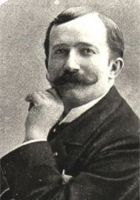
Louis-Gaston Ganne (* April 5, 1862 in Buxières-les-Mines (Allier department); † July 13, 1923 in Paris) was a French composer and conductor He was known especially for stage works and marches.
Louis Ganne was born in Auvergne but grew up in Issy-les-Moulineaux. He studied at the ''Conservatoire de Paris'', where his teachers included Théodore Dubois and Jules Massenet (composition) and César Franck (organ). In 1881 he received a First Prize in the class of harmony, and also a Second Prize in Franck's organ class. From the same year he conducted musical events and opera balls at the ''Folies Bergère'' and other Parisian music halls. Later he worked at the ''Casino of Royan'' and in Monte Carlo, where he conducted the popular concert series "Les Concerts de Louis Ganne". In 1905 he founded the ''Orchestre du Casino de Monte Carlo''. In 1907 Ganne became president of the SACEM and in 1914 was inducted into the Legion of Honor.
As a composer, Ganne concentrated on lighter works, especially operettas, ballets, music for pantomimes and vaudevilles. His operettas ''Les Saltimbanques'' (1899) and ''Hans, le Joueur de Flûte'', based on the legend of the Pied Piper of Hamelin (premiered in Monte Carlo in 1906) were particularly successful outside France. Of Ganne's instrumental pieces, including patriotic marches, his ''Marche lorraine'' which became an important musical motto of the Résistance during World War II, became especially well known.
Note: Translated from the German version of Wikipedia into English.