Wikipedia:
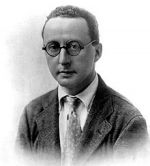
Jerome David Kern (* January 27, 1885 in New York; † November 11, 1945 ibid.) was an American composer who wrote music for dozens of Broadway shows and Hollywood films. Among his best-known titles are ''Smoke Gets in Your Eyes'', ''Ol' Man River'', ''All the Things You Are'' and ''The Way You Look Tonight''.
Jerome Kern was born in the Sutton Place District of New York. His parents were Jews who had emigrated from Germany to the United States. The boy had inherited his musical talent from his mother Fanny, who was a piano teacher. Jerome's father Henry was first a clerk, but later became self-employed when the family moved to Newark, New Jersey. He dealt in furniture and pianos. Henry Kern would have liked his son, Jerry, to join him in business, but nothing came of it. The boy was determined to get into a profession that had to do with music.
After graduating from high school, he studied at the New York College of Music. His teachers included Alexander Lambert, Austin Pierce and Paolo Gallico. He later continued his studies in Heidelberg. In 1904, he returned to his homeland. From 1905 onwards, he repeatedly spent longer periods in London. There he also met Eva Leale, whom he married in 1910.
Although Kern had graduated with a Master of Music degree, he began his musical career with menial work until one of the many Broadway theaters finally hired him as a rehearsal pianist. It was a time when numerous operettas from Europe on Broadway won the applause of the audience. He had to play the same melodies over and over again until the singers knew them by heart. Once he made a joke of it by smuggling his own melody into a European operetta song. This brought the young talent to the attention of a director and a theater producer. They liked the new fresh melody better than the familiar one. From then on, new songs by Jerome Kern were incorporated into European operettas.
After the 1911 extravaganza "La Belle Paree", for which he had written the music together with Frank Tours, followed a year later his first operetta composed by him alone, "The Red Petticoat". Its success was limited. The piece was cancelled after only two months. In 1914, he was commissioned to adapt the English operetta "The Girl From Utah" for American needs and to expand it with his own songs. Now his first real success came. The sheet music of his song "They Didn't Believe Me", the great hit of this play, was sold in millions of copies. In the following quarter-century Kern composed the music for 33 stage works. The most successful were "Sally" (1920) and "Sunny" (1925). In the process, more and more elements of the European-sounding operetta receded into the background in favor of elements that later became typical of the "musical comedy" genre.
The year 1927 brought Jerome Kern the climax of his fame: In collaboration with the librettist Oscar Hammerstein II, the world success "Show Boat" was created. The premiere took place on December 27, 1927 at the Ziegfeld Theatre in New York and became a triumphant success. For the first time in a purely American stage work, mere musical numbers were no longer strung together, but entire scenes were built up musically and dramatically on several occasions.
In the course of the next decades, Jerome Kern also often worked as a film composer, adapting many of his musicals for the "musical film" genre, which was booming in Hollywood. Twice he received the Oscar in the category "Best Song": in 1936 for "The Way You Look Tonight" from "Swing Time" and in 1941 for "The Last Time I Saw Paris" from "Lady Be Good".
On November 5, 1945, Jerome Kern was strolling on Park Avenue in New York. While doing so, he suffered a heart attack and fell unconscious into the street. Less than a week later, he died. In the year of his death, he was elected to the American Academy of Arts and Letters. In 1946, the film ''Until the Clouds Pass By'' was released, in which Kern was portrayed by Robert Walker.
Note: Translated from the German version of Wikipedia into English.