


Wikipedia:
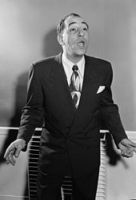
Louis Prima (* December 7, 1910 in New Orleans; † August 24, 1978 in New Orleans) was an American entertainer, singer, trumpeter and actor. A star on the Hollywood Walk of Fame in Los Angeles is dedicated to him.
The son of Anthony Prima (1886-1961) and Angelina Caravella (1890-1965), he was the second of four children. Caravella was the daughter of an Italian barber. Louis Prima first played in bands such as Ellis Stratakos in 1928 and Red Nichols in 1932.[1] Prima was first heard in Chicago as a member of the Hotcha Trio (David Rose, piano and Norman Gast, violin) on recordings made on September 28, 1933, for example on the tracks Chinatown, My Chinatown / Dinah. In 1934, he went back to New Orleans and played at the ShimSham club, where he was discovered by Guy Lombardo, who secured him a recording contract with Brunswick Records.
He put together his first own band in September 1934 under the name New Orleans Gang, which initially included Claude Thornhill (piano), George Brunies (trombone), Sidney Arodin (clarinet), George Van Eps (guitar), Artie Shapiro (bass) and Stan King (drums). In the first recording session on September 27, 1934, four titles were created, including Hoagy Carmichael's ''Stardust'', all of which failed to make the charts. The same applies to the six tracks recorded on November 1, 1934, including the first Louis Prima composition ''I Still Want You''.
The recording session scheduled for April 3, 1935 saw a completely changed New Orleans Gang. With Frank Pinero (piano), Larry Altpeter (trombone), Eddie Miller (clarinet, tenor saxophone), Garry McAdams (guitar), Jack Ryan (bass) and Ray Bauduc (drums), four recordings were made that day, of which ''I'm Living in a Great Big Way'' reached number 13 in the pop charts. ''In A Little Gypsy Tea Room'', recorded on June 27, 1935, even reached number four - Louis Prima's best ever placement. In 1937, he made an appearance in the musical film ''Manhattan Merry-Go-Round''. From January 1940, he renamed the group the Louis Prima Orchestra, whose best-known hit was the song ''Angelina'', recorded in April 1944.
In March 1935, he performed with the band at the Famous Door Club in New York, one of the hottest jazz clubs of the time. From May 1935, he employed clarinettist Pee Wee Russell for the first time, whose nervous playing brought dynamism to the band. His clearly recognizable Neapolitan accent in English sounded strange. On February 28, 1936, Prima composed the title ''Sing, Sing, Sing'' (With a Swing) with Frank Pinero (piano), Pee Wee Russell (clarinet), Joe Catalyne (tenor saxophone), Garry McAdams (guitar), Jack Ryan (bass) and George Pemberty (drums).
Prima's recording of this fell short of the hit parade, and it was only in the overlong live version by Benny Goodman (recorded on January 16, 1938 in Carnegie Hall) that the Prima composition achieved world fame and became a jazz standard. He then appeared in several Hollywood films such as Rhythm on the Range, which was released on July 1, 1936.
1945: ''Some Sunday Morning'' (Majestic)
In March 1937, clarinettist Meyer Weinberg joined the band; in September 1939, he repeated his engagement in the Famous Door Club. In 1940, his older brother Leon Prima joined the band and in March 1949 the young singer Keely Smith (Dorothy Gambardella), who was meanwhile under contract with RCA, joined the band. In November 1949, the band switched to Mercury Records. A veritable label hopping followed, which led via Co-lumbia Records (1951/1952) to Decca Records in April 1954. The album Capitol Collectors Series, released in 1991, was awarded a gold record in the USA in 2008.
Las Vegas was in the process of establishing itself as an entertainment metropolis from 1954: Prima and Keely, who became Prima's fourth wife that year, were given a two-week gig in the Casbah Lounge of the Sahara Hotel, for which tenor saxophonist Sam Butera and his band The Witnesses were specially hired. The band included Jack Marshall (guitar), Amado Rodrigues (bass), Willie McCumber (piano), James "Little Red" Blount (trombone) and Bobby Morris (drums). Prima's best-known songs were written with this line-up, but they never made it into the charts. On April 19, 1956, now on Capitol Records, the well-known medley ''Just a Gigolo / I Ain't Got Nobody'' was joined by ''Body and Soul'', ''Oh Marie'', ''Buona Sera and Jump'', ''Jive, An' Wail''.
During the rock 'n' roll era, Prima released numerous songs in this genre. A later moderate chart success came with the classic ''That Old Black Magic'', recorded on August 25, 1958 (number 18 on the US pop chart), which was awarded a Grammy. In the Walt Disney animated film The Jungle Book (1967), he voiced the monkey king King Louie and sang the song ''I Wanna Be Like You'', to which he also contributed the trumpet.
Louis Prima was married five times; he had one child from his first marriage to Louise Polizzi from 1929 to 1936. From 1936 to 1947, he was married to Alma Ross. He also had one child from his marriage to Tracelene Barrett from 1948 to 1953. From 1953 to 1963, he was married to Keely Smith, with whom he had two children. His last marriage to Gia Maione produced a son, Louis Prima junior (* 1965), who is also an active musician, and a daughter. Louis Prima died in 1978 as a result of a heart attack. He was buried in the Metairie Cemetery in New Orleans.
Note: Translated from a German version of Wikipedia into English.
Louis Prima (* December 7, 1910 in New Orleans; † August 24, 1978 in New Orleans) was an American entertainer, singer, trumpeter and actor. A star on the Hollywood Walk of Fame in Los Angeles is dedicated to him.
The son of Anthony Prima (1886-1961) and Angelina Caravella (1890-1965), he was the second of four children. Caravella was the daughter of an Italian barber. Louis Prima first played in bands such as Ellis Stratakos in 1928 and Red Nichols in 1932.[1] Prima was first heard in Chicago as a member of the Hotcha Trio (David Rose, piano and Norman Gast, violin) on recordings made on September 28, 1933, for example on the tracks Chinatown, My Chinatown / Dinah. In 1934, he went back to New Orleans and played at the ShimSham club, where he was discovered by Guy Lombardo, who secured him a recording contract with Brunswick Records.
He put together his first own band in September 1934 under the name New Orleans Gang, which initially included Claude Thornhill (piano), George Brunies (trombone), Sidney Arodin (clarinet), George Van Eps (guitar), Artie Shapiro (bass) and Stan King (drums). In the first recording session on September 27, 1934, four titles were created, including Hoagy Carmichael's ''Stardust'', all of which failed to make the charts. The same applies to the six tracks recorded on November 1, 1934, including the first Louis Prima composition ''I Still Want You''.
The recording session scheduled for April 3, 1935 saw a completely changed New Orleans Gang. With Frank Pinero (piano), Larry Altpeter (trombone), Eddie Miller (clarinet, tenor saxophone), Garry McAdams (guitar), Jack Ryan (bass) and Ray Bauduc (drums), four recordings were made that day, of which ''I'm Living in a Great Big Way'' reached number 13 in the pop charts. ''In A Little Gypsy Tea Room'', recorded on June 27, 1935, even reached number four - Louis Prima's best ever placement. In 1937, he made an appearance in the musical film ''Manhattan Merry-Go-Round''. From January 1940, he renamed the group the Louis Prima Orchestra, whose best-known hit was the song ''Angelina'', recorded in April 1944.
In March 1935, he performed with the band at the Famous Door Club in New York, one of the hottest jazz clubs of the time. From May 1935, he employed clarinettist Pee Wee Russell for the first time, whose nervous playing brought dynamism to the band. His clearly recognizable Neapolitan accent in English sounded strange. On February 28, 1936, Prima composed the title ''Sing, Sing, Sing'' (With a Swing) with Frank Pinero (piano), Pee Wee Russell (clarinet), Joe Catalyne (tenor saxophone), Garry McAdams (guitar), Jack Ryan (bass) and George Pemberty (drums).
Prima's recording of this fell short of the hit parade, and it was only in the overlong live version by Benny Goodman (recorded on January 16, 1938 in Carnegie Hall) that the Prima composition achieved world fame and became a jazz standard. He then appeared in several Hollywood films such as Rhythm on the Range, which was released on July 1, 1936.
1945: ''Some Sunday Morning'' (Majestic)
In March 1937, clarinettist Meyer Weinberg joined the band; in September 1939, he repeated his engagement in the Famous Door Club. In 1940, his older brother Leon Prima joined the band and in March 1949 the young singer Keely Smith (Dorothy Gambardella), who was meanwhile under contract with RCA, joined the band. In November 1949, the band switched to Mercury Records. A veritable label hopping followed, which led via Co-lumbia Records (1951/1952) to Decca Records in April 1954. The album Capitol Collectors Series, released in 1991, was awarded a gold record in the USA in 2008.
Las Vegas was in the process of establishing itself as an entertainment metropolis from 1954: Prima and Keely, who became Prima's fourth wife that year, were given a two-week gig in the Casbah Lounge of the Sahara Hotel, for which tenor saxophonist Sam Butera and his band The Witnesses were specially hired. The band included Jack Marshall (guitar), Amado Rodrigues (bass), Willie McCumber (piano), James "Little Red" Blount (trombone) and Bobby Morris (drums). Prima's best-known songs were written with this line-up, but they never made it into the charts. On April 19, 1956, now on Capitol Records, the well-known medley ''Just a Gigolo / I Ain't Got Nobody'' was joined by ''Body and Soul'', ''Oh Marie'', ''Buona Sera and Jump'', ''Jive, An' Wail''.
During the rock 'n' roll era, Prima released numerous songs in this genre. A later moderate chart success came with the classic ''That Old Black Magic'', recorded on August 25, 1958 (number 18 on the US pop chart), which was awarded a Grammy. In the Walt Disney animated film The Jungle Book (1967), he voiced the monkey king King Louie and sang the song ''I Wanna Be Like You'', to which he also contributed the trumpet.
Louis Prima was married five times; he had one child from his first marriage to Louise Polizzi from 1929 to 1936. From 1936 to 1947, he was married to Alma Ross. He also had one child from his marriage to Tracelene Barrett from 1948 to 1953. From 1953 to 1963, he was married to Keely Smith, with whom he had two children. His last marriage to Gia Maione produced a son, Louis Prima junior (* 1965), who is also an active musician, and a daughter. Louis Prima died in 1978 as a result of a heart attack. He was buried in the Metairie Cemetery in New Orleans.
Note: Translated from a German version of Wikipedia into English.
1 results
Sort

Series:Hits
Instrumentation:Solo>x+Piano
Difficulty:medium
Items per page

