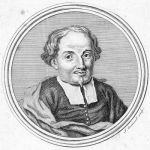
Foggia was a boy soprano at the Collegium Germanicum of the Jesuits in Rome and a pupil of Antonio Cifra, Giovanni Maria Nanino and Paolo Agostini. He was then presumably employed at the court of the Bavarian Elector Maximilian I in Munich and then also in Vienna. He later worked as an organist at various churches in Rome. From October 1634, he was at the chapel of Santa Maria in Trastevere for two years, and from December 1636 to 1662 he is mentioned as the chapel master of the patriarchal basilica of San Giovanni in Laterano. In 1667, as chapel master of the Basilica of San Lorenzo in Damaso, he published an anthology ''Psalmodia Vespertina'', which contained a cross-section of his work and included psalms, magnificats and Marian antiphons. From 1677 until his death, he was cantor at the patriarchal basilica of Santa Maria Maggiore in Rome, and his son Antonio Foggia succeeded him in the post. Francesco Foggia, who was awarded several chapel master titles for life in Rome, is considered the last great representative of the Roman School and one of the most influential Roman chapel masters of the 17th century. He died with great honor in Rome.
Wikipedia
Note: Translated from a German version of Wikipedia into English.