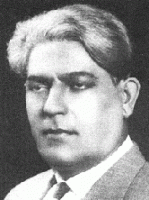
Juan, in Brazilian João, Pernambuco, born João Teixeira Guimarães (* 2 November 1883 in Jatobá; † 16 October 1947 in Rio de Janeiro) was a Brazilian guitarist and composer.
As a child of Indian-Portuguese descent, João Guimarães moved to Recife with his parents at the age of 12, where he learnt a lot musically from singers and guitarists from the Sertão (the mountainous region of Brazil). In a short time, he developed into a remarkable self-taught guitarist. He also learnt the trade of blacksmith in Recife. Although he was illiterate, he became a profound connoisseur of popular culture and the guitar.
In 1902, Guimarães, called Pernambuco, moved to Rio de Janeiro, where he took a job as an assistant in the prefecture. In Rio de Janeiro, he met many important musicians such as Donga, Pixinguinha, Catulo da Paixão Cearense and Satyro Bilhar, with whom he played music. He founded the group Grupo do Caxangá, from which the Oito Batutas later emerged. From 1911 onwards, he wrote many compositions such as Caboca di Caxangá, which became a great success at the carnival in 1914. The themes of his compositions were often inspired by Brazilian folk music, for example in his choros. He recorded many discs with important Brazilian musicians of his time.