


 Cesta de compras
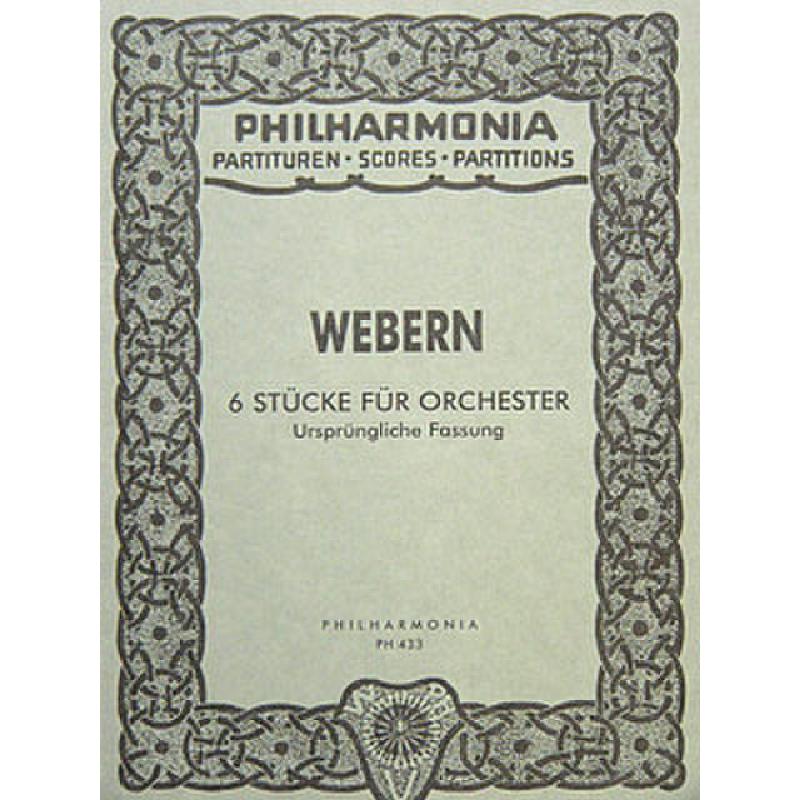
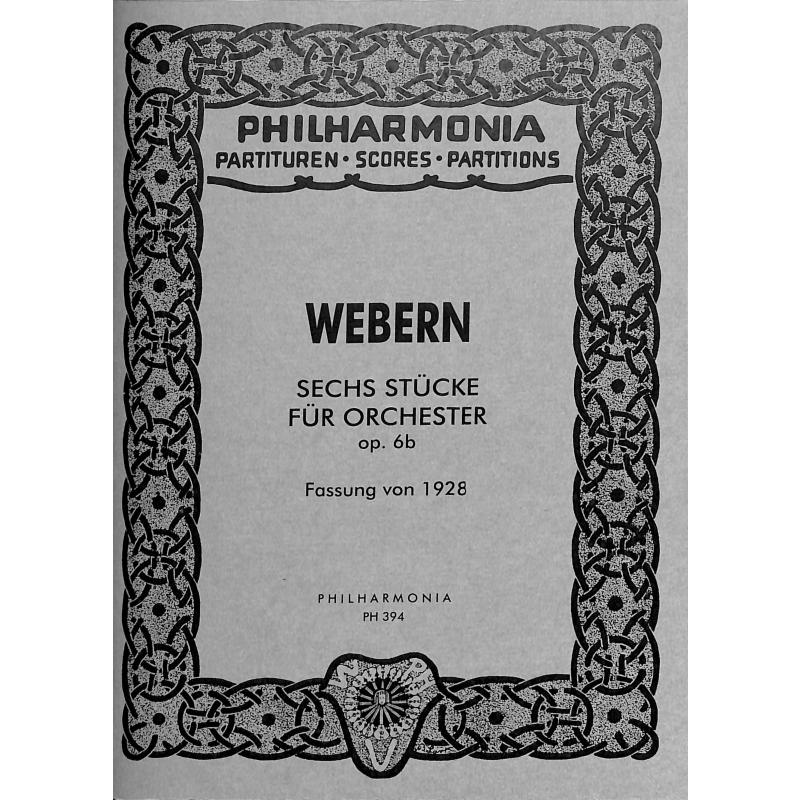
 Webern, Anton: 6 Pieces
Reduced version of 1928
When Webern wrote these pieces in 1909 he was in his mid-twenties; he had a university degree {Doctor of Philosophy) under his belt, was equally possessed by music and innocent, had acquired in Schoenberg's school the moral and technical equipment of a highly developed art of composition, and was scraping out a living as an assistant operetta conductor. His guiding examples, apart from Schoenberg, were Mahler and Wagner and, probably without his being conscious then of their proximity, the erudite music-masters of the Middle Ages and the Renaissance who had occupied him during his studies at the Musicological Institute directed by Guido Adler at the University of Vienna. The predecessors to Opus 6 were - besides several timorous student ventures, a piano quintet in C major and the imposing Passacaglia Op. 1 composed under Schoenberg's Supervision - a few little vocal works (Op. 2, 3 and 4) and the Five Movements for String Quartet. The pieces for orchestra are the only larger, as it were symphonic, work into which Webern incorporated his "method", that "method" he was later fond of associating with the concept "law", in the double meaning of the Greek word "nomos". Here, to be sure, the law is not yet identical to the row law of twelve-tone composition which subsequently raised his method to the state of musical autonomy, but it is already very much his own law. A different aspect of greatness. The rather conventional external display of instrumentation, which binds Opus 6 to the mental and emotional sphere of the Passacaglia and its silent partners, also counts, precisely because this Webernian law materializes spontaneously in the opposite direction, in concentration on internals, or more exactly, in the substratum of seeming insignificance that is brought to light. A world of musical micro-organisms is displayed. The Six Pieces have an average length of 25 bars; the longest (IV) has 41, the shortest (III) has 11. The mental volume is of course incommensurable. There is nothing comparable in pre-Webern music, and as a category in the domain of occidental musical art it has remained present only through him. (F.S.)
Contenido
- Sechs Stücke für Orchester (Fassung von 1928)
Envío gratis
en Alemania a pedidos desde 40€
|
Precio:
18.95*
€
* Posible envío gratis, los miembros disfrutan de una rebaja de hasta 6,00 Euros.
|
x |
orchestra
Universal Edition
Orchestra/Ensemble, Orchestra, Symphony Orchestra
20th/21st century
Paperback
Miniature score
Philharmonia Taschenpartituren
978-3-7024-1050-6
979-0-008-02296-8
9783702410506; 9790008022968
PH394
| |
Composiciones similares
Categoría: Hojas de àlbum
Instrumentación: Piano, Dificultad: Fácil a mediana
Categoría: Sonatas/Sonatinas
Instrumentación: Piano, Dificultad: Mediana a difícil

Categoría: Canciones (espirituales)
Instrumentación: Coro>SATB, Dificultad: Mediana
Marcha nupcial (op. 61/ 9) Mendelssohn Bartholdy, Felix
Categoría: Piezas sueltas, Tema: Boda
Instrumentación: Piano, Dificultad: Mediana
Categoría: El clave bien temperado I
Instrumentación: Piano, Dificultad: Mediana


