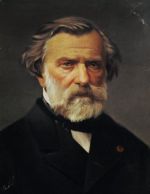
From ''Metzler's Music Encyclopedia 4.0'':
THOMAS, Charles Louis Ambroise, *8/5/1811 Metz, France †12/2/1896 Paris, France; French composer. He studied with Fr. Kalkbrenner (piano) and J. -Fr. Le Sueur at the ''Paris Conservatoire'' and received the ''Prix de Rome'' in 1832 for his cantata Hermann et Ketty. Returning to Paris in 1836 he played the violin at the ''Théâtre des Vaudevilles''. As of 1837 he began to emerge as an opera composer, initially with modest success, but from 1849 onward he gained increasing prestige, becoming a member of the ''Académie des Beaux-Arts'' in 1851 and a teacher at the ''Conservatoire'' in 1852. He became its director after E. E. Auber's death in 1871 and continued until 1896.
Works: 20 operas, mostly Opéras-comiques, among them (UA in Paris): Le carnaval de Venise (1857) - Mignon (Libr.: J. Barbier u. M. Carré after J. W. von Goethes Wilhelm Meisters Lehrjahre) (1866) - Hamlet (Libr.: dies. nach W. Shakespeare) (1868) - Françoise de Rimini (Libr.: dies. nach Dante) (1882). Ballets: La gypsy (1839) - La tempête (after Shakespeare) (1869). Additional church music. Works, piano songs and romances, pieces for piano and for organ, some chamber music and orchestra works.
His fame and charisma extended far beyond France and his peculiar position in modern opera history is based above all on Mignon (with 1000 performances in 28 years at the Paris Opera Comique alone) and Hamlet. With these works, he continued the musical popularization of Goethe and Shakespeare works (Faust/Margarethe, Roméo et Juliette) initiated by Ch. Gounod in the form of "lyrical" operas. Although often criticized, Mignon has not lost its effectiveness to this day thanks to the catchy, often sentimental melody of great cantability.