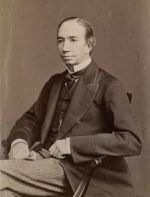
Henry Brinley Richards, born on November 13, 1817 in Carmarthen, Wales, grew up in a musical family, as his father was the organist of St Peter’s Church and ran a music shop. Although a medical career had originally been planned for him, his musical talent became evident early on. In 1834, he won a prize at the Gwent-Morgannwg Eisteddfod in Cardiff for his arrangement of the folk song The Ash Grove, which earned him the support of a patron and enabled him to study at the Royal Academy of Music in London. There, he received the King’s Scholarship in 1835 and 1837. He later continued his studies in Paris, where he was influenced by Frédéric Chopin, and where his first major composition, an overture in F minor, was performed.
After returning to London, Richards became a piano teacher at the Royal Academy of Music, later a professor, and eventually part of the institution’s leadership. Alongside his work as a pianist and teacher, he composed more than 250 pieces, including numerous piano works, songs, choral compositions, and arrangements of Welsh melodies. His most famous piece is the patriotic song God Bless the Prince of Wales from 1862. Under the bardic name “Pencerdd Towy,” he was strongly committed to Welsh music, participated in national festivals, and worked to preserve and promote Welsh musical traditions.
He died on May 1, 1885 in Kensington, London. Henry Brinley Richards is regarded as one of the most important Welsh musicians of the 19th century, whose work significantly influenced both musical practice and the cultural identity of his country.